
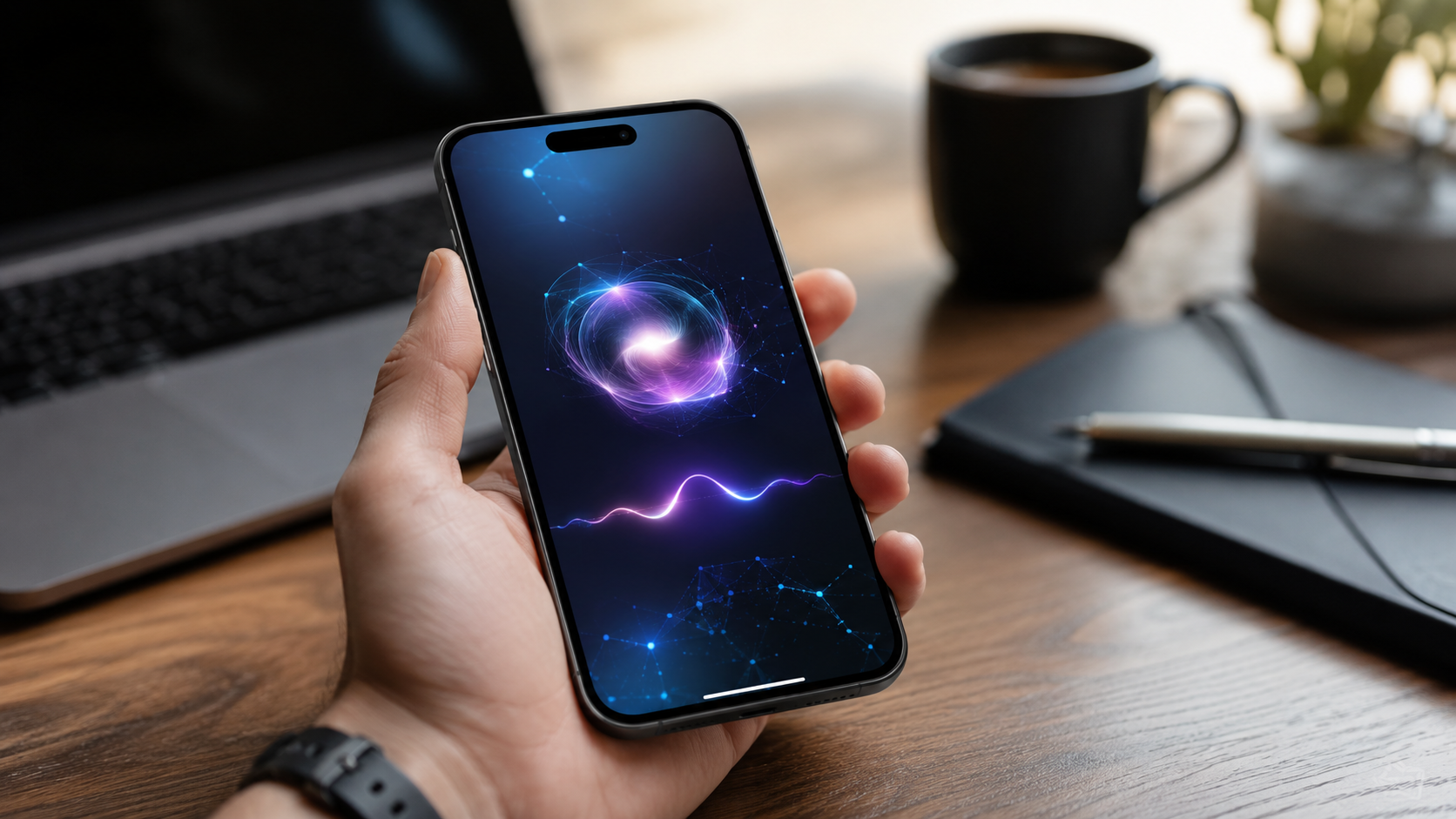
For many years, Siri has been useful, but limited.
It can set alarms.
It can call someone.
It can check the weather.
It can send a short message.
But compared with today’s AI assistants, Siri often feels like an old tool inside a very modern phone.
That is about to change.
Apple has introduced a new version called Siri AI, described as a completely reimagined assistant that is more capable, conversational and deeply integrated across Apple products. Apple says Siri AI can understand personal context, answer questions based on what is on screen, search across messages, emails and photos, and take action across apps.
The interesting part is what sits behind it.
Apple and Google have entered a multi-year collaboration where the next generation of Apple Foundation Models will be based on Google’s Gemini models and cloud technology. Google said these models will help power future Apple Intelligence features, including a more personalised Siri.
In simple words, your iPhone is not just getting a software update.
It is getting a new AI brain.
What Is Actually Changing?
The old Siri was mainly a voice command tool.
The new Siri AI is designed to behave more like a proper assistant.
According to Apple, Siri AI will be able to draw on personal context, understand what is on the user’s screen, search across apps, and provide more detailed answers using broad world knowledge. It can also take actions across apps, such as helping draft an email or working with content shown on the screen.
That means Siri may become more useful in real daily situations.
For example, instead of asking Siri only to “call John,” users may ask it to find information from old messages, pull details from emails, understand a document on screen or help complete a task across apps.
This is a big shift.
The phone is no longer just waiting for simple commands.
It is becoming more context-aware.
Why Google’s Gemini Role Matters
Apple has always preferred to control its own ecosystem.
That is why the Google partnership is important.
Reuters reported that Apple will use Google’s Gemini models for its revamped Siri under a multi-year deal. Reuters also noted that the agreement gives Google access to Apple’s large installed base, which includes more than two billion active devices.
This does not mean the iPhone is becoming an Android phone.
It does not mean Apple is giving up its privacy positioning either.
Google’s joint statement with Apple said Apple Intelligence will continue to run on Apple devices and Private Cloud Compute while maintaining Apple’s privacy standards.
But it does show one thing clearly.
AI is now too important for even the largest technology companies to handle alone.
Apple has the devices.
Google has strong AI models.
The result is a partnership that could change how millions of people use AI every day.
Why This Matters to Businesses
At first, this sounds like consumer technology news.
But it is not only about consumers.
Many employees use iPhones for work.
They read company email on iPhone.
They join Teams or Zoom meetings.
They open customer messages.
They access cloud storage.
They review documents.
They approve payments.
They use WhatsApp, CRM apps, banking apps and business dashboards.
Once AI assistants become more deeply connected to these daily workflows, businesses need to pay attention.
The question is no longer:
“Do we use AI in the company?”
A better question is:
“Are employees already using AI through the devices and apps they carry every day?”
That is a very different discussion.
AI Assistants Will Become Normal Workplace Tools
Companies used to think of AI as a separate tool.
Something employees open in a browser.
Something IT can approve or block.
Something management can discuss later.
That view is becoming outdated.
AI is moving into phones, email platforms, office software, browsers, customer service tools, security products and cloud dashboards.
When Siri becomes more capable, some employees will naturally use it for work.
They may ask it to summarise information.
They may ask it to find an email.
They may ask it to draft a reply.
They may ask it to explain a document.
They may ask it to help prepare for a meeting.
That can improve productivity.
But it also creates a new data protection question.
What type of company information should an employee allow an AI assistant to process?
The Privacy Question Is Not Optional
Apple has been clear that privacy is part of its AI architecture. Apple says Siri AI uses a privacy-focused architecture and that Apple Intelligence continues to use on-device processing and Private Cloud Compute where needed.
That is important.
But businesses still need their own rules.
A strong platform privacy model does not remove the company’s responsibility to protect business data.
Employees may still handle:
- Customer information
- Pricing documents
- Internal emails
- Contracts
- Financial reports
- HR records
- Technical screenshots
- Support tickets
- Project files
- Supplier information
If AI assistants can understand screens, search across apps and work with personal context, companies must define what is acceptable for business use.
This is not about fear.
It is about clarity.
The Line Between Personal Phone and Work Device Is Getting Blurrier
Many businesses allow employees to use their own phones for work.
This is common.
It is convenient.
But AI makes the line blurrier.
A phone may contain personal photos, personal messages, work emails, company files, business apps and cloud access all in one place.
If the AI assistant can understand context across the device, businesses need to think carefully about device management.
Important questions include:
- Is the device company-owned or personal?
- Is mobile device management enabled?
- Can company data be separated from personal data?
- Can work apps be remotely wiped if needed?
- Is the device protected with strong authentication?
- Are business apps using managed accounts?
- Are employees allowed to use AI features with company information?
Without clear rules, each employee will decide for themselves.
That is where risk begins.
This Is Also a Cloud Security Issue
AI assistants do not work in isolation.
They rely on cloud systems, identity platforms, app permissions, device security and data access.
For companies, that means AI adoption is connected to cloud security.
If your email account is poorly protected, AI can make it easier to search through sensitive information.
If cloud file permissions are too open, AI may help users find documents they should not access.
If old employee accounts are still active, AI-assisted search may increase the impact of weak access control.
If mobile devices are unmanaged, company data may be harder to protect.
So the real issue is not only Siri.
The issue is whether your company’s digital environment is ready for smarter assistants.
What Companies Should Review Now
Businesses do not need to panic.
They do not need to ban every AI assistant.
But they should start reviewing how AI is entering daily work.
1. Update Your AI Usage Policy
A company AI policy should not only cover ChatGPT or browser-based tools.
It should also cover AI features inside phones, email platforms, office apps, browsers and business software.
The policy should explain what data can and cannot be used with AI assistants.
2. Review Mobile Device Usage
If employees access company email and files from iPhones, review how those devices are managed.
For company-owned devices, mobile device management should be considered.
For personal devices, the company should at least define basic security requirements.
3. Protect Business Accounts With MFA
Multi-factor authentication should be enabled for email, cloud storage, CRM, admin systems and remote access.
Smarter AI assistants make it even more important to protect the accounts they can help users search or access.
4. Separate Personal and Business Data
Where possible, use managed business apps and company accounts.
Avoid mixing personal storage with business documents.
This helps reduce accidental data exposure.
5. Review App Permissions
AI assistants and business apps often rely on permissions.
Companies should understand which apps can access mail, files, calendars, contacts, photos and cloud storage.
Permissions should not be wider than necessary.
6. Train Employees in Simple Language
Employees do not need a long technical lecture.
They need practical rules.
For example:
“Do not ask AI assistants to process customer data, contracts, passwords, financial records or confidential company documents unless the tool is approved for business use.”
That sentence alone can prevent many mistakes.
7. Review Backup and Recovery
As mobile devices and cloud apps become more important, backup remains critical.
Emails, files, documents and business systems should not depend only on one device or one platform.
Company data should be backed up properly and recoverable when needed.
The Business Opportunity
This upgrade is not only a risk story.
There is also real opportunity.
A better Siri could make employees faster.
It could help staff find information more easily.
It could reduce time spent switching between apps.
It could make mobile work more productive.
It could help users manage tasks, messages and documents more naturally.
For businesses with proper controls, AI assistants can become useful tools.
The companies that benefit most will likely be the ones that prepare early.
They will not allow uncontrolled usage.
They will also not block productivity blindly.
They will create a safe middle ground.
The Bigger Picture
The Apple and Google partnership shows where technology is heading.
AI will not stay inside one app.
It will become part of the operating system.
It will sit inside the phone.
It will connect to messages, files, calendars, photos, apps and search.
That is much more powerful than a normal chatbot.
It is also why businesses need to take AI governance seriously.
The next wave of AI will not always arrive as a new system purchased by management.
Sometimes, it will arrive as a phone update.
Closing Thoughts
The title may sound dramatic, but the point is real.
The iPhone is getting a much smarter assistant, and Google’s Gemini technology is helping power the next stage of Apple Intelligence.
For users, this may finally make Siri feel useful in daily life.
For businesses, it is a reminder that AI is entering the workplace through everyday devices, not only through official company software.
That means AI governance should not wait.
Review mobile access.
Protect cloud accounts.
Update AI usage rules.
Train employees.
Separate business and personal data.
Check backup and recovery.
The future workplace will not only be cloud-based.
It will be AI-assisted.
Companies that prepare now will be in a better position to use these tools safely, productively and responsibly.
At Net Onboard, we help businesses build secure, reliable and scalable cloud environments through managed cloud hosting, cybersecurity, backup and business continuity solutions.
If your company wants to review cloud security, AI usage policy, mobile access or backup readiness, Net Onboard can help design a practical approach that fits your business operations.