
Asia’s cloud market is changing quickly.
In the past, most businesses talked about cloud hosting in simple terms. CPU. RAM. Storage. Monthly price.
Today, the discussion is becoming much bigger.
Artificial intelligence is pushing data centre demand to a new level. Companies need more computing power, better cooling, stronger power supply, faster networks and more reliable cloud platforms.
That is why SK Telecom’s latest AI data centre plan is worth paying attention to.
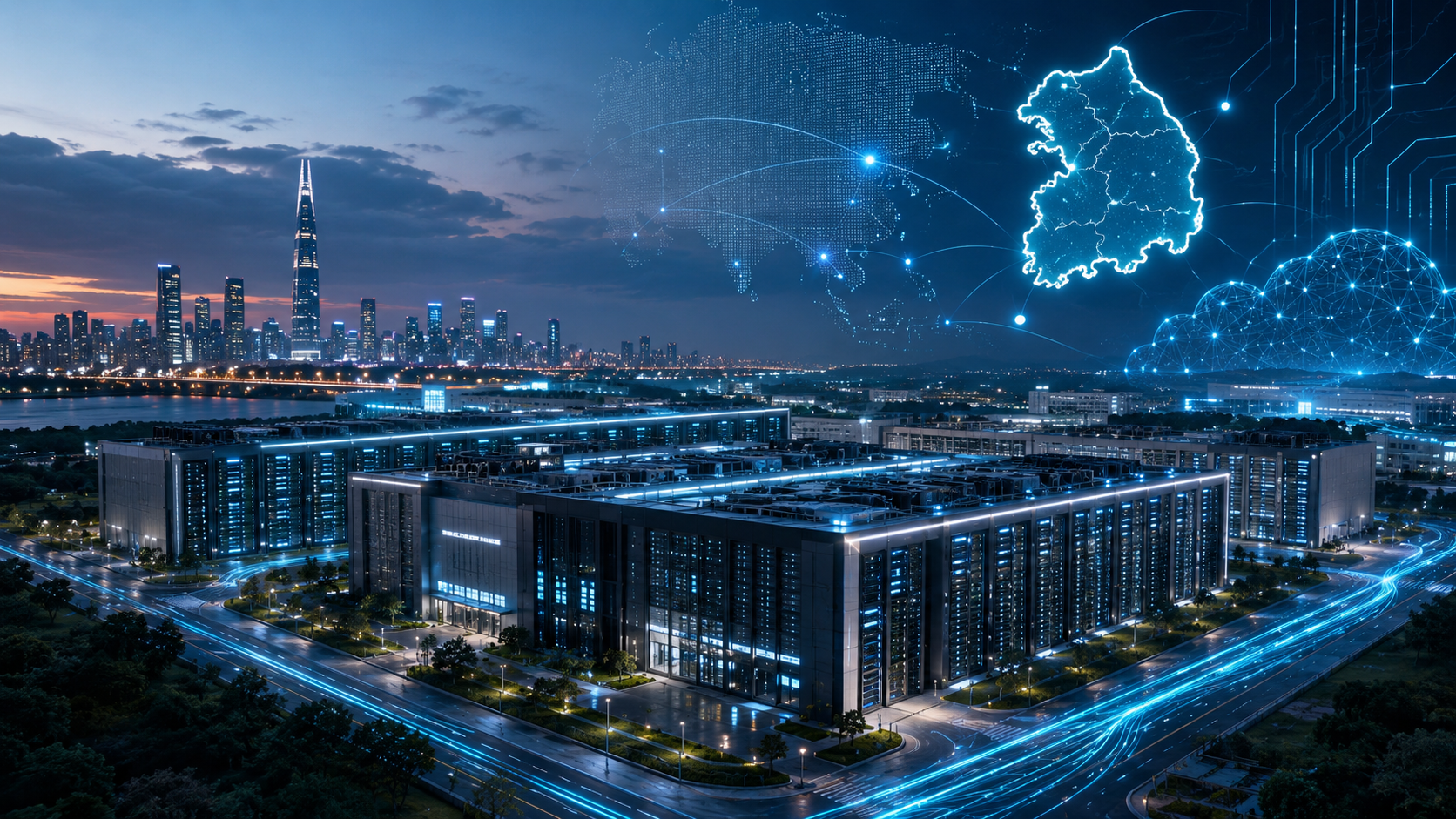
On 5 July 2026, SK Telecom announced its plan to develop up to 15 gigawatts of AI data centre capacity across South Korea, with the goal of positioning the country as a leading AI infrastructure hub in Asia.
This is not just a technology headline.
It is a signal of where the cloud industry is going.
What Did SK Telecom Announce?
SK Telecom plans to build large-scale AI data centre capacity across South Korea.
The company said the project will begin with an AI data centre in Ulsan, which is already under construction. It then plans to expand into a broader cluster of more than 2GW in the southeastern region and another 1GW in the southwestern region. Together, these projects are expected to bring domestic capacity to around 5GW, with phased operations beginning in 2029.
In the long term, SK Telecom aims to scale the total capacity to 15GW by 2035.
The company is also working with major global technology players. Its Ulsan AI data centre is being developed with AWS and is scheduled to begin operations in the second half of 2027. SK Telecom has also announced plans to operate an AI factory model with Nvidia from 2027.
In simple terms, South Korea is not only trying to build more data centres.
It is trying to build the foundation for AI growth.
Why AI Data Centres Are Different
A normal data centre hosts websites, systems, applications and business data.
An AI data centre does much more.
It needs to support heavy workloads such as model training, AI inference, large-scale data processing, image generation, video analysis and enterprise automation.
These workloads require very powerful chips, usually GPUs or other AI accelerators. They also need high-bandwidth memory, strong networking, advanced cooling and stable electricity.
That is why AI infrastructure is more complex than traditional cloud hosting.
It is not only about server space.
It is about the full stack:
- Chips
- Power
- Cooling
- Network
- Security
- Data storage
- Cloud management
- Physical data centre operations
SK Telecom also highlighted that AI data centre infrastructure depends on three core elements: semiconductors, energy solutions, and data centre construction and operation capabilities.
This is important because not every cloud provider can support AI workloads properly.
AI-ready infrastructure requires more planning, more investment and stronger technical design.
Why This Matters to Asia
South Korea is already strong in semiconductors, memory chips and advanced manufacturing.
That gives the country an advantage.
AI data centres need large amounts of high-performance memory and computing hardware. South Korea is home to major chip players such as Samsung Electronics and SK Hynix, which makes the country important in the AI supply chain.
Reuters recently reported that South Korea has announced major chip and AI initiatives involving semiconductors, physical AI and AI data centres. The plan includes large-scale investments from top corporations and government support.
This shows a bigger trend.
Asia is no longer only a user of cloud and AI services.
Asia is becoming a builder of AI infrastructure.
Singapore is already a major cloud and connectivity hub. Malaysia is growing as a data centre location. India is expanding cloud and AI demand. South Korea is pushing AI infrastructure at national scale.
The region is becoming more connected, more competitive and more important.
What This Means for Malaysian Businesses
At first, a 15GW AI data centre plan in South Korea may sound far away from a normal Malaysian business.
But the direction matters.
When large technology companies build more AI infrastructure in Asia, more AI-powered services will become available in the region. These services may include automation tools, customer service bots, document search, fraud detection, cybersecurity monitoring, analytics and cloud-based business applications.
Many businesses will not build their own AI systems.
But they will use software that runs on AI infrastructure.
This means cloud reliability, data protection and network performance will become more important for everyday business operations.
For Malaysian SMEs, the question is not only:
“Do we need AI now?”
A better question is:
“Is our current IT setup ready for more cloud and AI usage in the next few years?”
The Cloud Buying Decision Will Change
Many companies still choose cloud services mainly based on price.
That is understandable.
Every business wants to control cost.
But as workloads become more critical, the cheapest option may not always be the safest option.
Businesses need to look at the full picture:
- Is the cloud platform stable?
- Is the data protected?
- Is backup included?
- Is there proper support?
- Can the system scale when usage grows?
- Is the hosting location suitable for customers?
- Is there a recovery plan if something fails?
AI will make these questions more important.
A business may start with a normal website or email system today. Later, it may add customer portals, automation tools, data dashboards or AI-powered workflows.
If the cloud foundation is weak, every new layer becomes harder to manage.
AI Also Increases Security Risk
AI infrastructure is powerful, but it also creates new risks.
More data will be collected. More systems will be connected. More automation will happen in the background.
That means businesses need to take security more seriously.
This includes:
- Access control
- Endpoint protection
- Backup and recovery
- Email security
- Cloud monitoring
- Data loss prevention
- Disaster recovery planning
AI does not remove the need for cybersecurity.
It makes cybersecurity more important.
As companies become more dependent on cloud-based tools, a simple mistake can lead to downtime, data loss or business disruption.
What Businesses Should Do Now
Most SMEs do not need to build AI infrastructure.
But they should prepare their IT environment properly.
Here are a few practical steps.
1. Review Your Current Cloud Setup
Check where your website, email, business system and backup are hosted.
If everything depends on one server or one location, there may be risk.
2. Make Backup a Priority
Do not wait until data is lost.
A proper backup plan should include automatic backup, secure storage and clear recovery steps.
3. Understand Your Recovery Time
If your system goes down, how fast can you recover?
This is important for websites, customer portals, accounting systems and internal business tools.
4. Improve Security Before Adding More Tools
Before adopting more AI or automation tools, make sure access, passwords, endpoint protection and email security are properly managed.
5. Work With a Cloud Partner, Not Just a Vendor
Cloud is no longer just rental of server space.
A good cloud partner should be able to advise on performance, security, backup, continuity and future scalability.
Closing Thoughts
SK Telecom’s 15GW AI data centre plan is a strong sign that Asia is moving into a new stage of cloud infrastructure.
AI will not only change software.
It will change the way data centres, networks, power systems and cloud platforms are built.
For businesses, this does not mean everything must change immediately.
But it does mean the foundation matters more than before.
A reliable cloud setup can help a company work faster, protect its data, recover from problems and prepare for future technology adoption.
At Net Onboard, we help businesses build secure, reliable and scalable cloud environments through managed cloud hosting, backup, cybersecurity and business continuity solutions.
If your business is planning to improve its cloud infrastructure, strengthen backup protection or prepare for future AI-ready workloads, speak to our team today.