
The AI Story Is Changing
Over the past few years, much of the AI boom was about building infrastructure.
Technology companies spent heavily on:
- GPUs
- Data centres
- Large AI models
- High-speed networking
- Cloud computing
But that stage is beginning to mature.
According to Kenanga Research, the industry is now moving towards what it describes as AI’s “second inning.” BusinessToday
The next phase will increasingly focus on actually using all that computing power.
That means more AI agents, inference workloads and commercial applications.
What Is AI Inference?
Training an AI model teaches it how to work.
Inference is what happens when people actually use it.
Every time an AI assistant answers a question, analyses a document or performs a task, computing resources are needed to run that model.
If millions of businesses start using AI agents every day, inference demand could become enormous.
This means future AI growth may depend less on simply building bigger models and more on operating them efficiently at scale.
Five Areas Could Become Bottlenecks
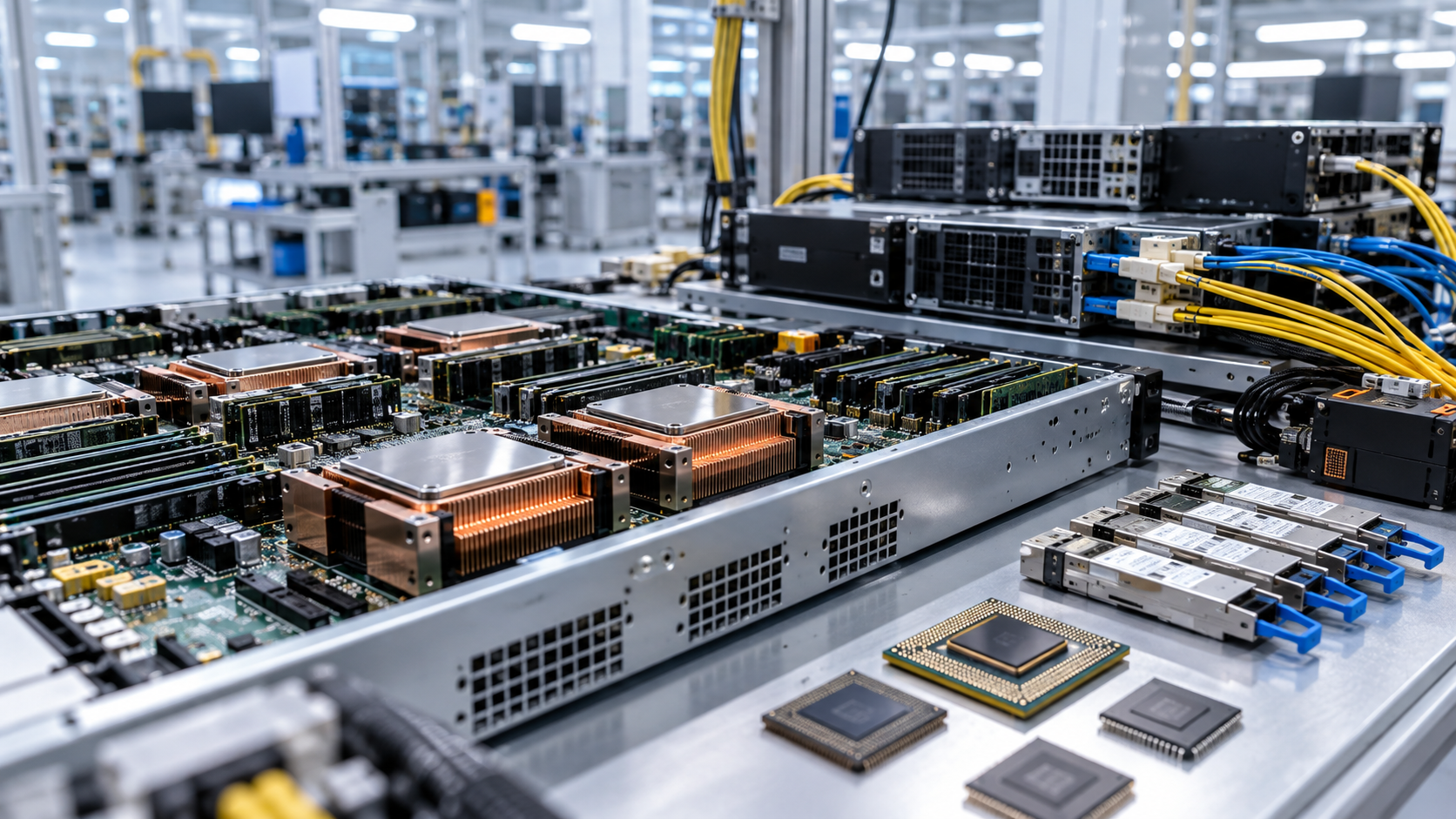
Kenanga highlighted five important parts of the AI infrastructure chain:
Compute — processors and AI accelerators.
Storage — systems that hold the enormous amount of data AI requires.
Optical connectivity — high-speed links connecting servers and AI clusters.
Power — reliable electricity required to operate AI infrastructure.
Equipment — machinery and systems required to manufacture advanced semiconductors. BusinessToday
These areas matter because AI cannot expand if one part of the infrastructure cannot keep up.
For example, having thousands of GPUs is not useful if there is not enough electricity to operate them.
Power Could Become One of the Biggest Limits
This is especially relevant to Malaysia.
The country is rapidly building data centres, but every new AI facility requires significant electricity.
Kenanga noted that power availability could increasingly determine which AI projects proceed, how quickly they expand and where major computing hubs are built. BusinessToday
That means Malaysia’s AI opportunity is connected not only to technology companies.
It also depends on:
- Electricity infrastructure
- Renewable energy
- Cooling
- Engineering
- Networking
- Utility capacity
AI is becoming a much wider infrastructure story.
Malaysia’s Opportunity Is in the “Picks and Shovels”
Malaysia does not necessarily need to create the next global AI chatbot to benefit.
There are opportunities in supplying the infrastructure behind AI.
Kenanga highlighted areas such as:
- Advanced semiconductor packaging
- Photonics and optical components
- Semiconductor equipment
- Precision engineering
- Data-centre infrastructure
- Ultra-high-purity gas systems
- Power infrastructure BusinessToday
These can be thought of as the “picks and shovels” of the AI boom.
No matter which AI model eventually becomes the most popular, those models still need physical infrastructure to operate.
But AI Exposure Alone Is No Longer Enough
This is probably the most important change.
Previously, simply announcing involvement in AI could attract significant attention.
Now, companies increasingly need to demonstrate:
- Actual customer orders
- Successful qualification
- Equipment installation
- Higher factory utilisation
- Growing production volumes
- Revenue contribution
Kenanga said these operational indicators are becoming more useful than simply waiting for AI-related growth to appear in quarterly earnings. BusinessToday
For Malaysia’s technology sector, this could separate companies with real AI demand from those benefiting mainly from market excitement.
Why This Matters to Malaysian Businesses
The same principle applies beyond listed technology companies.
Many businesses are currently experimenting with AI.
The next stage is asking whether it actually improves operations.
For example:
Does an AI assistant reduce customer-service workload?
Does automation shorten processing time?
Does AI improve sales conversion?
Can employees complete work faster?
Does the investment reduce operating costs?
The AI discussion is gradually moving from “Can we use AI?” towards “What measurable value does AI create?”
That is a healthier question for businesses.
Closing Thoughts
Malaysia has already attracted significant semiconductor, cloud and data-centre investment.
The next stage is execution.
Building infrastructure was the first step.
Now companies need to turn it into orders, products, services, productivity and revenue.
For Malaysia, that may ultimately determine how much long-term value the AI boom creates.
The winners of the next AI phase may not be the companies that talk about AI the most — but the ones that can prove they are actually delivering it.