
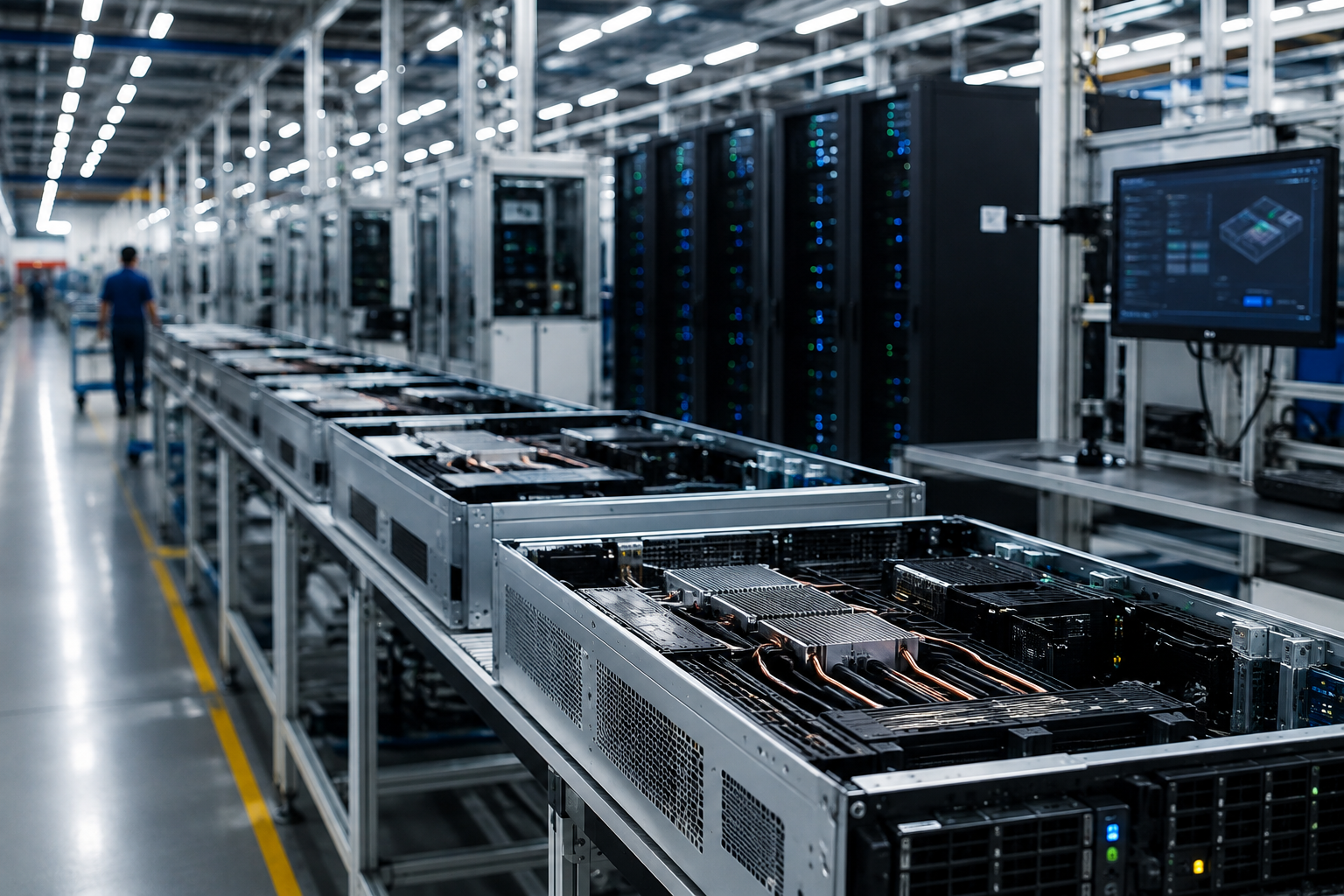
Foxconn Is Becoming an AI Infrastructure Company
For decades, Foxconn has been closely associated with assembling consumer electronics, particularly Apple’s iPhone.
That picture is rapidly changing.
On 12 August, Foxconn reported a 35% increase in second-quarter profit, reaching NT$59.97 billion, or approximately US$1.86 billion. Strong demand for artificial intelligence infrastructure was one of the biggest contributors to that growth.
More importantly, Foxconn’s cloud and networking division — which includes its rapidly expanding AI server operation — represented 51% of total revenue during the quarter.
Smart consumer electronics, including smartphones, contributed just 29%.
That is a significant transformation for a company once best known as the world’s largest electronics assembler.
AI Needs Much More Than Software
When people talk about AI, the conversation usually focuses on models such as ChatGPT, Gemini or Claude.
Behind those models is a huge physical infrastructure requirement.
AI systems need specialised GPUs, high-speed networking, storage, cooling, power and enormous numbers of servers running inside data centres.
Foxconn sits directly inside this infrastructure boom.
The company is Nvidia’s largest server manufacturer, and its second-quarter results show that demand for AI hardware is continuing despite growing concerns over how much technology companies are spending on AI infrastructure.
Foxconn’s investor calendar also confirms that its FY2026 second-quarter financial results were presented on 12 August 2026.
The Next Wave Is Already Coming
Foxconn is preparing for Nvidia’s next-generation Vera Rubin platform, with mass production of related AI server racks expected to begin in the fourth quarter.
One potential limitation is manufacturing capacity elsewhere in the supply chain. Foxconn highlighted availability of advanced CoWoS packaging from TSMC as an important factor determining how quickly AI server production can grow.
The company is also increasing capital expenditure and expanding manufacturing capacity across locations including India, Mexico and the United States.
Why This Matters
Foxconn’s transformation tells us something bigger about where the technology industry is heading.
The smartphone era created enormous manufacturing ecosystems around displays, processors, cameras and mobile devices.
The AI era is creating another infrastructure cycle — this time around GPUs, servers, networking, storage and data centres.
And unlike a new smartphone launch, much of this technology will never be seen by consumers.
It will sit quietly inside data centres powering the AI applications people use every day.
Closing Thoughts
Foxconn probably won’t stop being an important smartphone manufacturer anytime soon.
But the company’s latest numbers show that its centre of gravity is shifting.
AI is no longer simply a new software trend. It is reshaping the physical infrastructure of the technology industry — from semiconductor manufacturing all the way to servers, networking and data centres.
When the world’s largest electronics manufacturer starts earning more from infrastructure than consumer devices, it is a strong indication of where technology investment is moving next.