
Huawei Has More AI Demand Than It Can Supply
China’s AI industry is expanding quickly — and Huawei says it is struggling to manufacture enough hardware to satisfy demand.
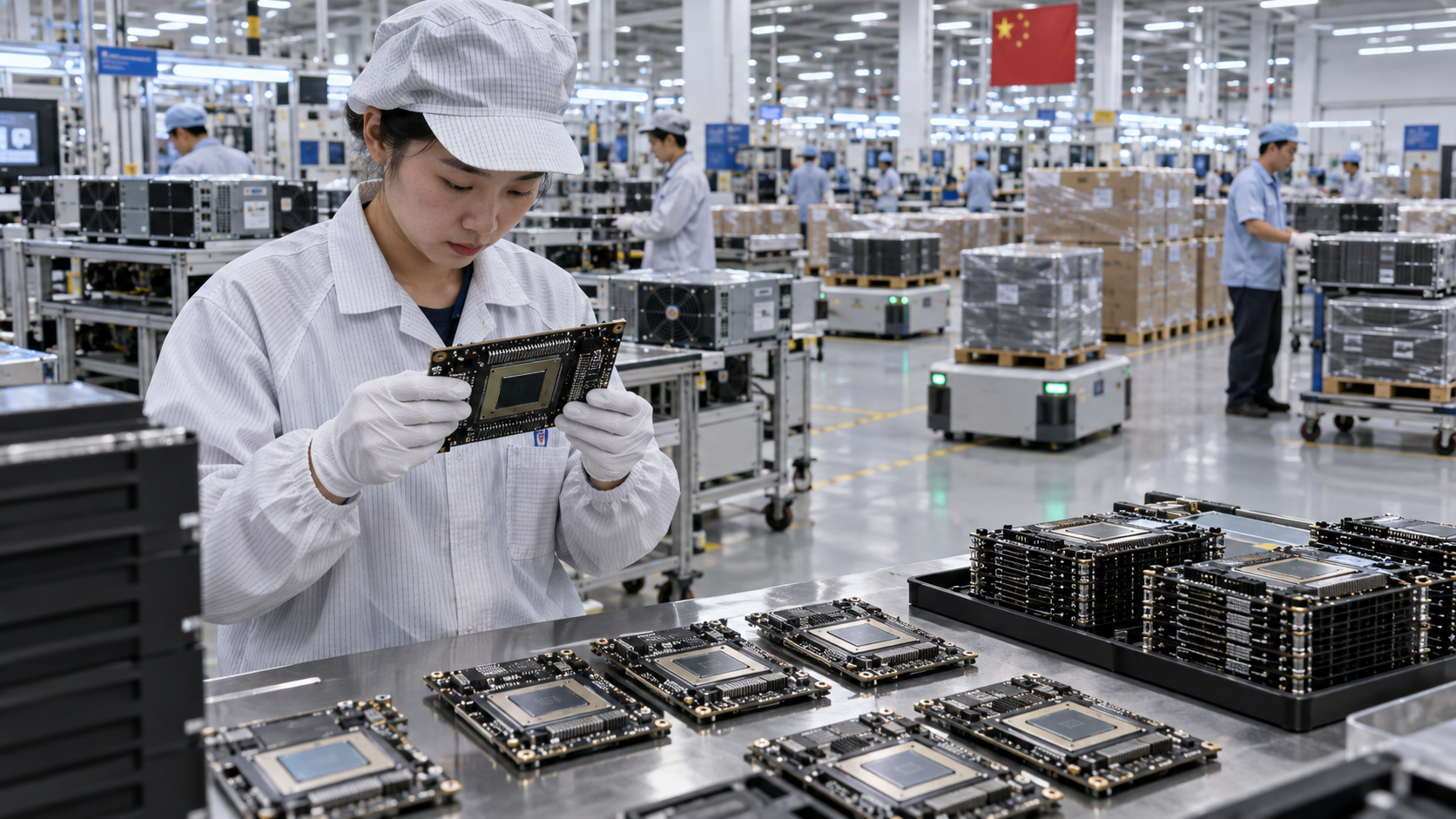
Speaking during HUAWEI CONNECT 2026 in Shanghai, rotating chairman Eric Xu said Huawei currently does not have enough production capacity to meet domestic demand for AI computing equipment.
That also means Huawei is currently prioritising customers inside China rather than aggressively expanding its AI hardware internationally.
The situation shows just how much demand there is for alternatives in the AI chip market.
The Next AI Chip Is Coming Earlier
Huawei is also speeding up its product roadmap.
Its next-generation Ascend 960DT, designed mainly for AI model training, is now scheduled for the first quarter of 2027.
That is three quarters earlier than Huawei’s previous roadmap.
The company says its performance will approximately double compared with the previous generation.
A second version, the Ascend 960PR, designed for inference workloads, is expected during Q3 2027.
Huawei then plans new Ascend generations in 2028 and 2029.
Huawei Is Connecting Thousands of Chips Together
Huawei’s strategy is not based only on making a single processor faster.
It is also trying to make large numbers of processors work together efficiently.
Its new Atlas 960E SuperPoD can connect up to 4,096 NPUs, delivering 8 EFLOPS of FP8 computing performance and up to 1 petabyte of high-bandwidth memory, according to Huawei.
The idea is similar to building one enormous AI computer from thousands of individual processors.
Huawei has taken that concept even further with its new Peerium Computing Architecture, which it says is designed to eventually allow as many as one million processors to operate together as one computing system.
Why This Matters
Modern AI models require enormous amounts of computing power.
That creates demand not just for individual chips but for complete systems involving:
- AI accelerators
- Memory
- Storage
- High-speed networking
- Optical connections
- Cooling
- AI software
Huawei is therefore competing at the system level, rather than relying only on the performance of a single processor.
This approach could become increasingly important as AI models grow larger and require thousands of processors working together.
Closing Thoughts
Huawei saying it cannot manufacture enough AI hardware to meet China’s demand is another sign that the AI infrastructure boom remains extremely strong.
The competition is also changing.
It is no longer simply about creating the fastest individual AI chip.
Increasingly, success depends on how efficiently thousands — or potentially millions — of processors can work together.
That could make the next stage of the AI hardware race as much about system architecture and networking as it is about the chip itself.